Over 100 professionals,
including nurses, psychologists, therapists, teachers, and support staff,
working together with one goal:
to help each child reach their full potential.
We work one-on-one and as one,
because every step forward is a step towards care.
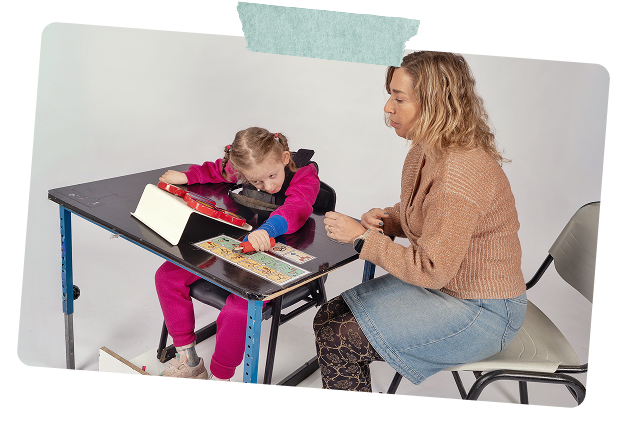
“When I saw Yaffa manage to catch the card on her own for the first time, I knew it wasn’t just a game. That was the moment she felt like everyone else.”
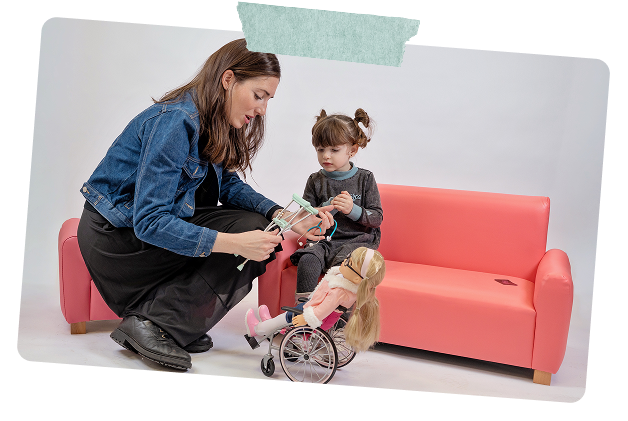
Sometimes, difficulties with grasping or fine motor control can prevent a child from fully participating in play. Through creative adaptations, assistive tools, and flexible thinking, we make sure every child can take part. What begins as a motor challenge becomes an opportunity for innovation, confidence, and meaningful learning.
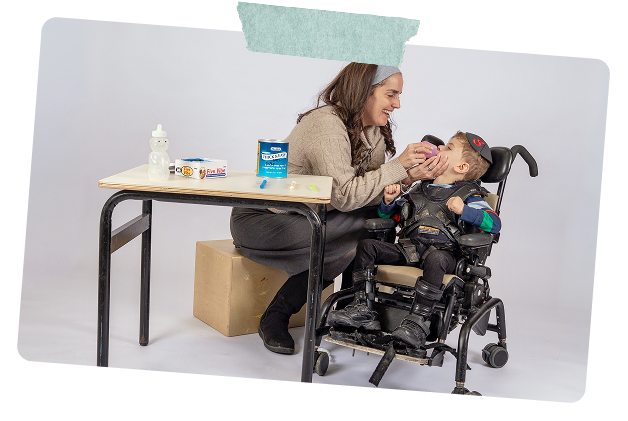
“Enjoying a favorite food on their own may seem simple, but for our children it means everything. It’s the moment they can say, ‘I can do it myself.’ It’s a matter of dignity.”
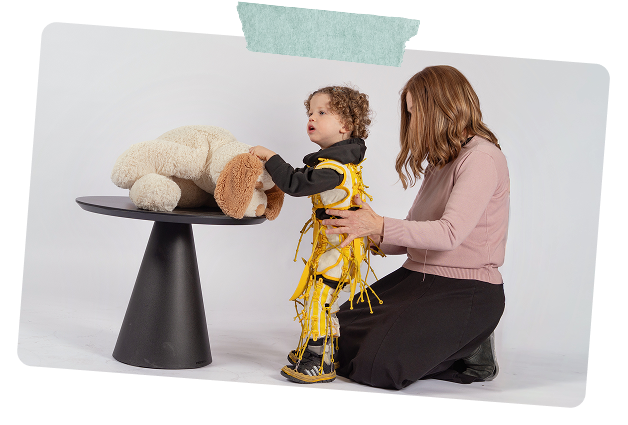
“The suit helps his muscles remember the movement, and my hands give him the confidence to try. When Dobby stands, I feel like I’m flying with him.”
Children who struggle with movement and posture receive intensive physiotherapy, including suit therapy that supports stability and alignment. This treatment strengthens muscles, improves posture, and helps children learn to stand and walk independently.
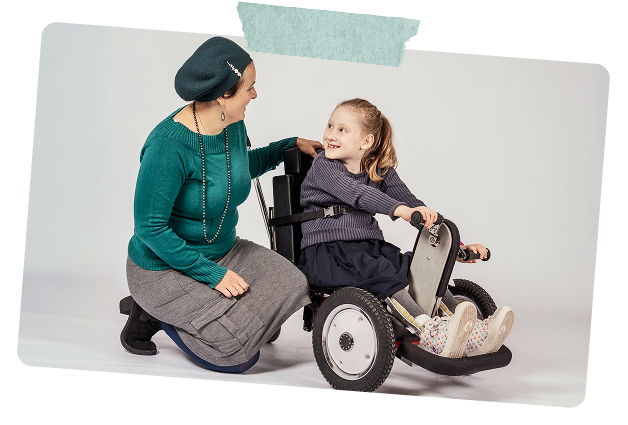
“On the bike, Hani feels like any other child. Every ride builds her confidence and independence.”
Children who have difficulty moving their legs or performing daily activities are provided with adapted equipment, such as rehabilitative handbikes, that allow them to stay active alongside their peers. These tools strengthen muscles, develop motor skills, and support full participation in everyday activities.
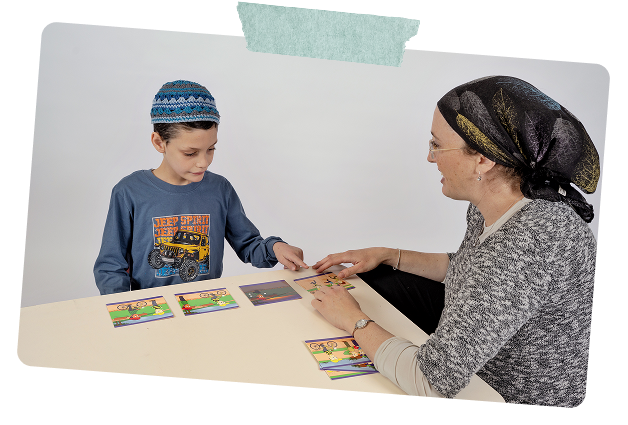
“When words come together in the right order, they become an experience. Nahorai feels that he is heard and understood.”
For children in rehabilitation, language does not always develop in a clear or structured way. Early experiences may be processed and organized differently, making it harder to express thoughts and feelings. Through hands-on activities using visual cards, children learn to organize their experiences, tell their personal stories, and share what they are going through.
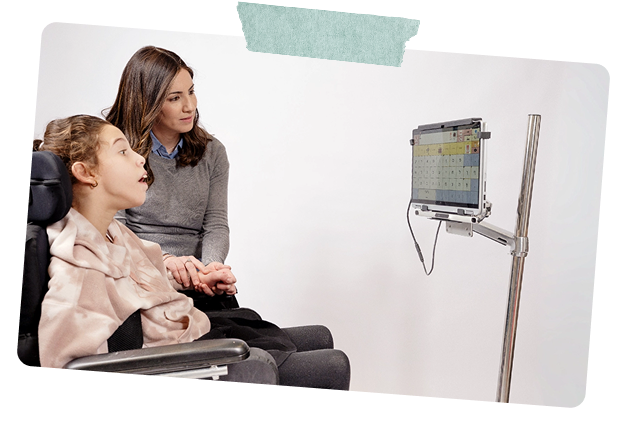
“There are many ways to communicate.”
We never give up on a child’s ability to express themselves. When speech isn’t accessible in the usual way, we are committed to finding the method that works best for each child to share their needs, thoughts, and feelings. Using a range of tools—communication boards, digital displays, iPads with specialized software, and eye-gaze systems—we tailor solutions to each child’s abilities and motor skills.
Every message is a step toward self-expression, greater independence, and a deeper connection with the world around them.
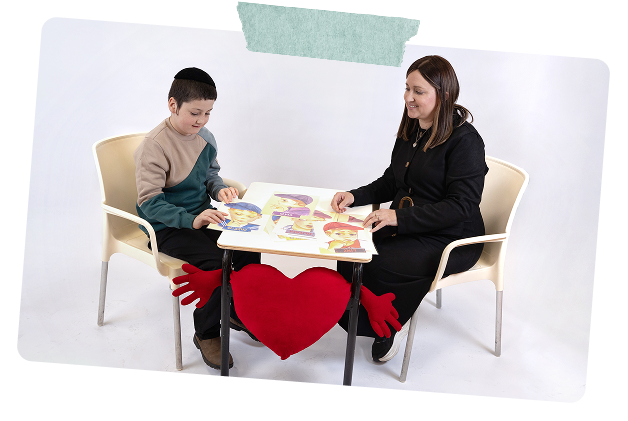
“When a child learns to share their feelings, I see their inner world become clearer and stronger.”
support in understanding and expressing their emotions. We help them identify their feelings, make sense of their inner experiences, and put those feelings into words.
This process builds confidence and self-worth, supports emotional regulation, and helps children form stronger, more meaningful relationships with family and friends
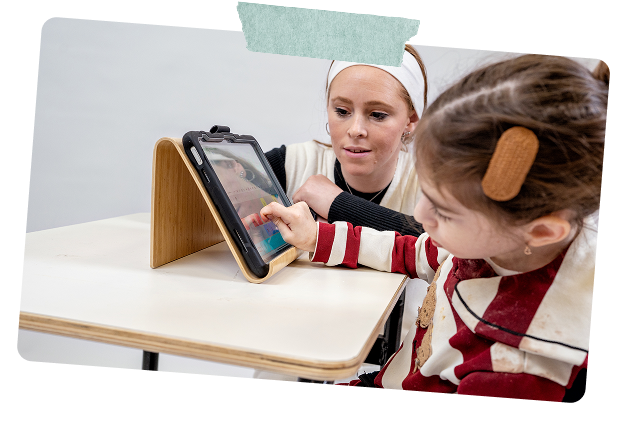
“Faige is able to learn and make progress thanks to the iPad.”
Children who struggle with traditional learning use assistive technology to participate in class, write, and complete learning activities. These tools strengthen independence and allow them to take an active role in school.
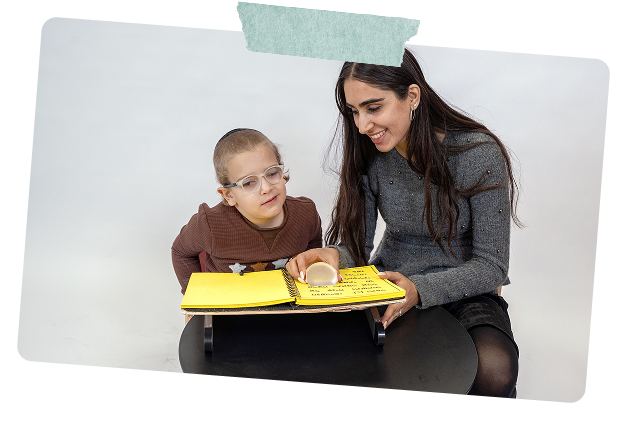
“Visual adjustments open the way for Ellie to learn in a meaningful way.”
Children with visual challenges use targeted supports to identify, track, and scan. These tools strengthen reading skills, build confidence, and help them navigate their environment both in and beyond the classroom.
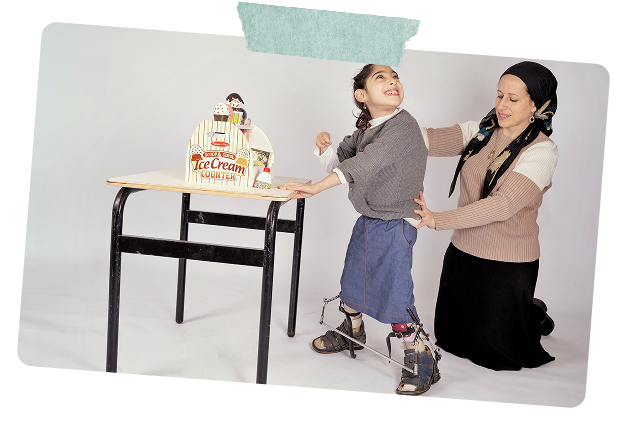
“With the right equipment, Yaeli can stand and play alongside everyone—nothing holds her back.”
One of the key goals of rehabilitation is helping each child become as independent as possible across different environments. At our center, children receive personalized, functional equipment tailored to their needs. These tools enable them to stay active, participate in everyday activities, and experience a sense of equality, confidence, and independence alongside their peers.
“When Esti learns new words, she gains the tools to express herself and her experiences.”
Expanding language and vocabulary is a key part of development. Working with a speech therapist, children build their word bank and learn strategies to access and use language more effectively. This enables them to communicate more clearly, grow in independence, and share their inner world with others.
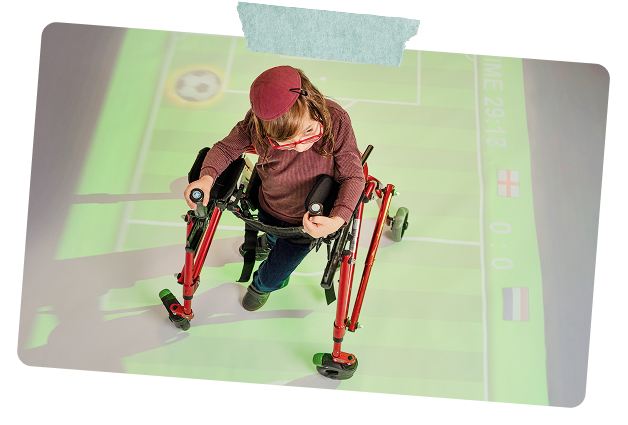
“Virtual reality gives Chaim the chance to experience movement in situations that aren’t accessible to him in everyday life. In that space, he can succeed—and that success builds his independence.”
אנו משתמשים בקבצי cookies כדי לשפר את חווית המשתמש שלכם. ע"י לחיצה על "אישור" אתם נותנים את הסכמתכם לשימוש שלנו בקבצי cookies ובטכנולוגיות אחרות כפי שמתואר במדיניות הפרטיות שלנו. אם תרצו, תוכלו לשנות את הגדרות קבצי ה-cookies בדפדפן האינטרנט שלכם. לחץ כאן למדיניות הפרטיות